
Farmington, MI · Garage Door Service
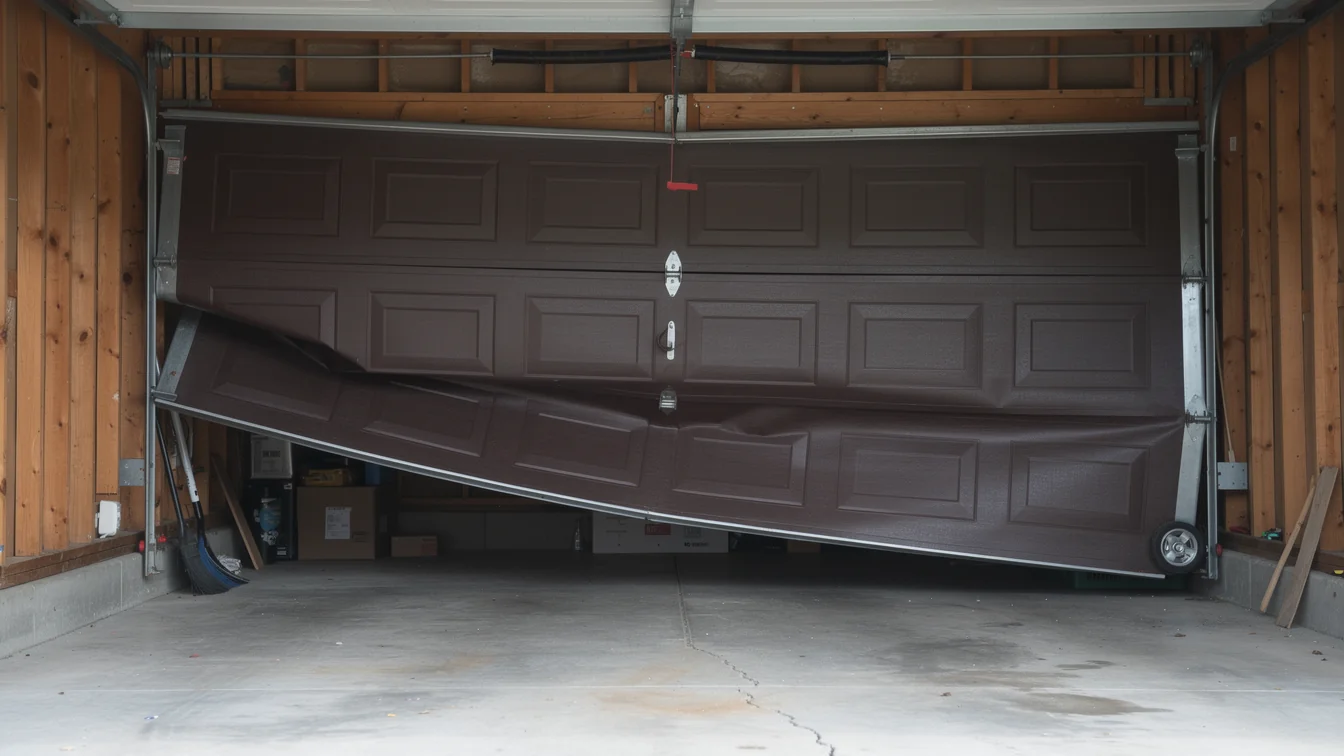
What Sends a Garage Door Off Its Tracks in Farmington
A look at why garage doors come off track in Farmington, where most houses date to 1938-1986 and winters are cold enough to work old hardware loose fast.
- Repairs & new doors
- Springs & openers
- Serving 6 nearby communities
What Local Conditions Do
Most houses in Farmington went up between 1938 and 1986, with the median sitting right around 1960, and the bulk of the stock across all 21 named areas this shop covers dates to the 1960s and 70s. That matters for a garage door track more than people expect. Track brackets from that era were bolted or screwed into framing that has had sixty-plus years to dry out and shrink. A fastener that was snug in 1965 is not snug now.
Farmington also sits in a climate band the federal data marks cold and severe. Steel track expands and contracts with every hard freeze and every thaw, and that cycle repeats for months at a time each winter. On a newer house with newer hardware, the track usually holds. On a door that has been riding the same bracket since the Johnson administration, the repeated movement works screws loose a little at a time, until one day the roller walks right out of the channel.
The two conditions compound each other. Old house, old hardware, hard winter. None of them alone sends a door off track overnight, but together they explain why it happens here on a predictable schedule rather than as a fluke.
The Common Mistake
The mistake we see most is someone noticing the door binding, dragging, or wobbling against the track, and deciding to just muscle it through with the opener a few more times. On a house built in the 1960-era wave that makes up most of Farmington's stock, that drag is usually a loose or slightly bent track bracket announcing itself, not a one-time fluke. Running the opener against a track that's already pulling away from the frame bends the track further and widens the gap the roller can jump.
The second mistake is lubricating the rollers and calling it fixed. Oil quiets a noisy roller for a week or two, but it doesn't re-seat a bracket that's worked loose from decades of freeze-thaw movement, and it doesn't straighten a track that's been bowed by a door forcing its way through a bind. The noise usually comes back worse, and sometimes the door comes off track entirely before anyone gets around to looking at the bracket itself.
We'd rather tell a homeowner now than get the emergency call in January: a door that drags is telling you something about the hardware, not the lubricant.
What to Check
Start at the brackets, not the rollers. On houses from Farmington's main building era, the brackets holding the track to the frame are the part most likely to have loosened over the years. Look for a gap between the bracket and the wall stud, or screws that spin without tightening - a sign the wood around them has shrunk and the fastener has nothing left to bite.
Next, sight down the track itself from the bottom. A track that's been pulled on by a binding door often shows a slight bow partway up, usually right where the bracket has loosened. You won't always see it standing in front of the door; you need to crouch and look along the rail.
Check the rollers themselves last. A worn or cracked roller contributes to the problem but rarely causes it on its own - it's the track and bracket condition that decide whether a worn roller stays in the channel or pops out. If the door came off track once already, don't just reset it and move on. Resetting it without fixing whatever let it jump the rail means it will happen again, usually at a worse moment.
The Situation
Here's the honest part: not every off-track door is worth repairing as-is. If the track itself is bent rather than just loose, straightening it rarely holds for long - a bent section weakens the metal, and it tends to re-bend at the same spot. On a lot of the older doors common to Farmington's 1960s and 70s housing stock, replacing that section of track costs close to what a full track replacement runs, so patching it is often money spent twice.
We also don't carry hardware for every original track profile still in service on houses from the 1938-1986 build range. Some of those parts aren't made anymore, and matching bracket spacing on a track that old can mean swapping more of the assembly than a homeowner expects going in.
What we can tell you without seeing the door: if it's come off track more than once, or if the bracket pulls away from the wall when you push on it by hand, that's past the point of a quick fix. It's worth a real look before the next cold snap puts more stress on hardware that's already given about as much as it's going to.
Frequently asked questions
Why does my garage door keep coming off track in the winter?
Steel track contracts in cold weather, and on a house from Farmington's main building era - mostly 1960s and 70s - the brackets holding that track have had decades of freeze-thaw cycles to work loose. Combine a loose bracket with a cold snap and the track can pull away from the frame just enough for a roller to jump the rail.
Can I just push the door back onto the track myself?
You can reset a door that's only slightly off, but doing that without checking the bracket and track condition first just sets it up to happen again. If the track is bent or the bracket is loose, resetting the door doesn't fix either problem - it just buys a few days before the same thing happens, often worse.
Is it worth repairing an old track or should I replace it?
If the track is bowed rather than just loose, straightening it usually doesn't hold for long, and on older hardware common in Farmington's housing stock, patching a bent section can cost close to a full track replacement anyway. A loose bracket on an otherwise straight track is a much simpler fix.
Related garage door services in Farmington
More garage door guides
Book garage door service in Farmington
Call now or request a quote - tell us what the door is doing and where you are.