Farmington, MI · Garage Door Service
What a Service Call Actually Covers in Farmington
A look at what a garage door service call covers in Farmington, MI, where homes built between 1938 and 1986 meet severe cold-climate wear on springs and hardware.
- Repairs & new doors
- Springs & openers
- Serving 6 nearby communities
What Local Conditions Do
Most houses in Farmington and the surrounding area went up between 1938 and 1986, with the bulk of that stock dating from the 1960s and 70s. That matters because doors and openers from that era weren't built with today's insulation standards or spring ratings in mind, and a lot of original hardware is still hanging on tracks installed decades ago.
The cold is the other half of the equation. This area sits in a severe cold climate band, which means steel contracts hard every winter and expands again every spring. That cycle works on torsion springs, on the galvanized coating on cables, and on the nylon rollers that a lot of older doors still have. A service call here isn't just "does the door go up and down" - it's checking whether thirty, forty, fifty years of freeze-thaw cycling has left something close to failing.
We look at spring wind and wear first, because a spring that's lost tension in cold weather is the single most common reason a door starts to feel heavy or won't fully close. After that we check the track alignment, since houses from this period often have settled foundations that have pulled tracks slightly out of square over the years.
The Common Mistake
The mistake we see most in this area is treating a noisy door like a lubrication problem when it's actually a tension problem. On a house built in the 1960s or 70s, that noise is usually the spring working harder than it should to compensate for cold-weakened steel, not a dry roller. Spraying lube on it quiets things down for a week and masks the real issue.
The other mistake is waiting for a full winter before calling. Given how many homes here were built before 1986, a lot of openers and springs are already past where the manufacturer expected them to still be in daily use. Cold makes marginal hardware fail; it doesn't create the problem, it just finishes it. We'd rather see a door in October than after the first hard freeze has already snapped a cable.
To be honest about the limits here: if a spring has already snapped and the door is down, that's not a same-visit lube-and-adjust job - it's a repair, and we tell people that up front rather than quoting a tune-up price for a broken-spring call.
What to Check
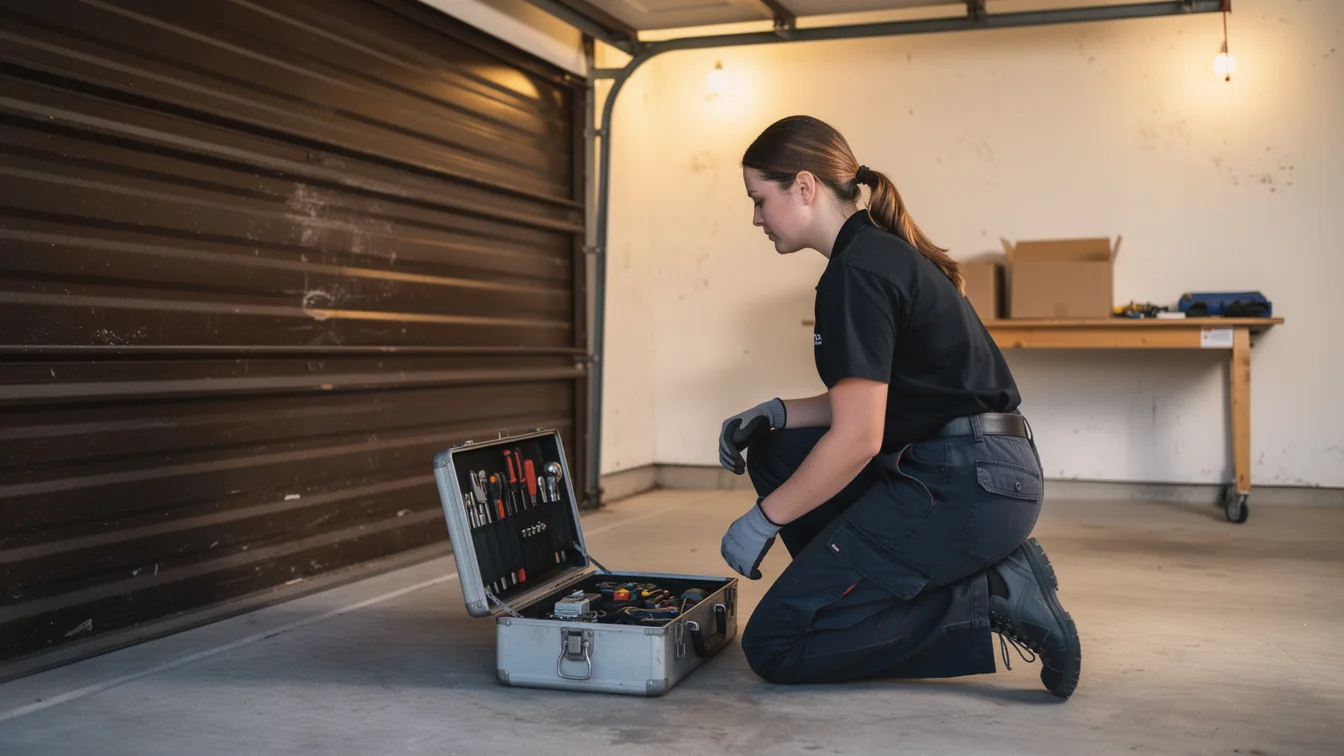
On a house from the 1960s-70s stock that's common across this area, we check the torsion spring wind count and look for gaps between coils - cold steel that's lost tension shows uneven spacing you can see without tools. We check the cable ends for rust bloom, since forty-plus winters of freeze-thaw is enough to compromise galvanizing on original hardware.
We check track plumb and the gap between roller and track, because foundation settling in homes from this build era is common enough that we see it as routine, not unusual. We check the opener's force settings, since a door that's gotten heavier from spring wear will make an older opener strain against its own safety reversal, and that strain is often what finally burns out a motor.
We also check weatherstripping and the bottom seal. In a severe cold climate, a worn seal isn't cosmetic - it's letting wind-driven cold straight into an attached garage, which on a lot of homes here sits against a bedroom or laundry wall.
The Situation
Farmington Garage Door Pros works across this part of the area, within a few miles of towns like Franklin, Northville, Bingham Farms, and Walled Lake. The housing stock across these 21 named areas runs the same range - mostly built between the late 1930s and mid-1980s, with most of it concentrated in the 1960s and 70s - so the hardware we're checking on a service call looks similar from one street to the next.
With median household income in the area over $99,000 and tens of thousands of owner-occupied houses across the service area, most homeowners here are maintaining a long-term property, not flipping it. That changes the calculus on a service call: a repair that extends the life of original hardware by another decade often makes more sense than a full replacement, provided the springs and track are sound.
We don't try to sell a new door on every visit. If the fix is a spring, a cable, or a track adjustment, that's what goes on the invoice.
Frequently asked questions
How often should I get my garage door serviced in Farmington?
Given the cold-climate wear on springs and cables here, once a year before winter is reasonable, especially on houses with original hardware from the 1960s-70s building boom. If your opener is straining or the door feels heavier than it used to, don't wait for the annual check - call sooner.
Why does my garage door feel heavier in winter?
Cold steel loses tension, and torsion springs are steel. In a severe cold climate like this one, a spring that's borderline in October can feel noticeably weaker by January. That extra strain gets passed to the opener, which is often what fails first.
Is my garage door's age a problem?
Not automatically. A lot of houses in this area were built between 1938 and 1986, and plenty of that original hardware still runs fine with regular tension checks. Age matters less than whether the springs, cables, and track have been kept in adjustment.
Related garage door services in Farmington
More garage door guides
Book garage door service in Farmington
Call now or request a quote - tell us what the door is doing and where you are.