
Farmington, MI · Garage Door Service
Garage Doors Built for a Different Winter Than the One Farmington Gets Now
Farmington homes built mostly in the 1960s and 70s have original hardware that struggles in Michigan's cold winters. Here's what to check before it fails.
- Repairs & new doors
- Springs & openers
- Serving 6 nearby communities
What Local Conditions Do
Farmington's housing stock runs older than people assume. Most of it went up between 1938 and 1986, with the thick of it landing in the 1960s and 70s, and that median build year of 1960 matters more than any brand name on your opener. Doors from that era were built for a garage that was treated as an afterthought, not a room you park a car in and walk through every day.
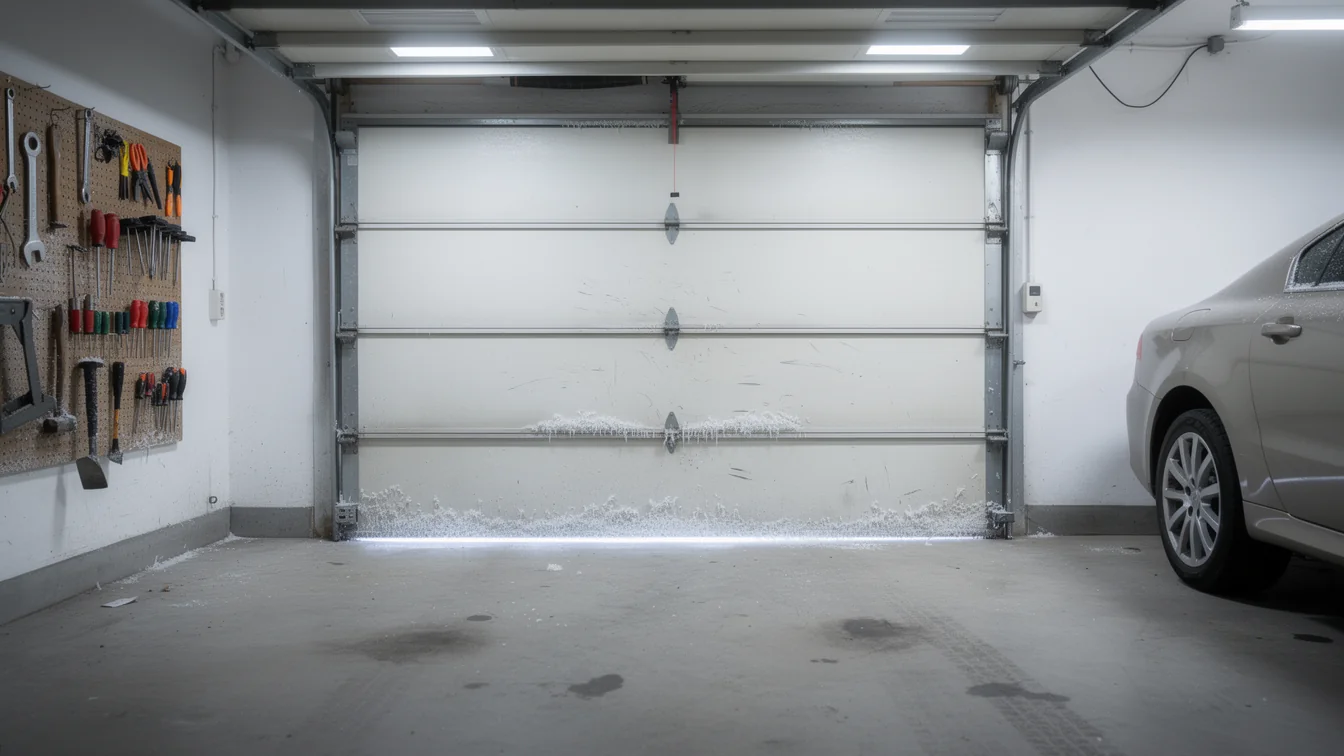
Then you add the climate. This is a severe cold band, the kind where a steel panel with no insulation acts like a radiator running backward, and a worn bottom seal lets in enough draft to frost the inside of the door itself. A door that was fine in 1965 wasn't built to hold a seal against decades of freeze-thaw cycling on the track and hinges.
The two things compound. Old hardware plus hard winters means springs lose tension faster, rollers seize in the cold, and openers built for a lighter, thinner panel strain to lift a door that's picked up moisture weight over fifty-plus winters. None of this is dramatic until the morning it is, usually the coldest morning of the year, which is exactly when a garage door should not fail.
The Common Mistake
The mistake we see most is treating a 1960s door like it has the same tolerances as a door sold today. Owners replace a broken spring with whatever size the shop has on hand, not the size matched to the original panel weight, and the door runs rough for years before anyone traces it back. Or they weatherstrip once and assume that's permanent, when cold-climate seals on an original frame compress and crack faster than people expect.
The other common mistake is waiting on insulation. A lot of these doors were never insulated to begin with, because insulation wasn't part of the code or the expectation when they were built. Owners patch a draft with foam tape instead of asking whether the door itself is the problem. In a severe cold zone, that's a stopgap that costs more in heating bills than it looks like it saves.
The honest limitation here: not every old door is worth saving. Once a torsion spring, bottom seal, and opener are all original and all near the end of their life at the same time, patching each one separately usually costs more over two years than one proper replacement. We'll tell you when that's the math, not just sell you the parts.
What to Check
Start with the spring. On a door original to a house built around 1960, a torsion spring has had a long run, and in cold weather metal fatigue shows up as a door that feels heavier in the morning than at noon. That's not your imagination.
Check the bottom seal next. If it's cracked, flattened, or doesn't make full contact with the slab, cold air is getting into the garage and often into an attached mechanical space. In a severe cold climate this isn't cosmetic.
Look at the panel itself. If it's a single layer of steel with no visible insulation backing, that's consistent with the 1960s-70s build era and it means the door has no thermal break at all.
Last, check the opener's age against the door's age. A lot of original doors in this area have had the opener swapped once already, which can mask how old the door, track, and spring actually are. Match the maintenance record to the house's build decade, not just the last service sticker.
The Situation
The service area runs through a tight cluster of older Michigan suburbs, Farmington included, where roughly 26,971 of the 49,017 households in the area own their homes outright, many of them in houses from that same 1938-1986 window. Median household income here sits at $99,286, which puts a proper insulated replacement within reach for most owners rather than a stretch.
That combination, older housing stock and households that can afford to fix it right, is why this isn't a market where cheap patch jobs make sense long term. A spring swap or seal replacement on a 1960s door is a reasonable repair. A full door with no insulation and a strained opener, on a house from the same era, is usually a replacement conversation, not a repair one.
We don't push replacement on every old door. Plenty of these units are sound and just need the maintenance that matches their age and the winters they sit through. But in this climate, on this housing stock, the gap between a well-maintained door and a neglected one shows up fast, usually in January.
Frequently asked questions
Why does my garage door feel heavier in winter?
On an older torsion spring, cold makes the steel stiffer and less forgiving, so the counterbalance that normally offsets the door's weight does less work. If your house dates to the 1960s or 70s, which is common in this area, the spring has likely had decades of freeze-thaw cycling already, and winter is when that fatigue shows up most.
Is it worth insulating an old garage door instead of replacing it?
Sometimes. If the panel, track, and hardware are otherwise sound, adding insulation and a new bottom seal can help in a severe cold climate. But if the door is original to a house built in the 1960s and the opener is already straining, insulating alone won't fix hardware that's at the end of its service life.
How do I know if my door's hardware is original to the house?
If your house falls in the common 1938-1986 build range for this area and no one in the household record remembers a door replacement, assume the spring and track are original until proven otherwise. A visible lack of insulation backing on the panel is a strong sign you're looking at original equipment.
Related garage door services in Farmington
More garage door guides
Book garage door service in Farmington
Call now or request a quote - tell us what the door is doing and where you are.